UX Foundations · Step 3 · 4 min read
Usability testing with five people
Watching a few people try your design is the fastest way to find what doesn't work. Why five participants is often enough (and when it isn't), how to write tasks, the think-aloud method, how to run a session without helping, and what to do with what you see.
The first time you watch someone struggle with your design, you'll never design the same way again. Things that were obvious to you, because you made them, turn out to be invisible, confusing or in the wrong place. A usability test is simple: give a real person a real task, ask them to think aloud, and watch. You don't need a lab, a finished product or a big budget.
What you'll be able to do after reading:
- Explain the "five users" rule and its limits
- Write good test tasks
- Run a think-aloud session without leading
- Turn what you saw into a short list of fixes
1. Why five?
Jakob Nielsen's well-known finding: "After the first study with five participants has found 85% of the usability problems", you learn more by fixing them and testing again than by adding more people (NN/g, Why You Only Need to Test with 5 Users, 2000). It comes from a model by Nielsen and Landauer (1993).
The limits, often forgotten:
- It's about finding problems in a qualitative test, not measuring. "5 users only applies to discovering problems", as Jeff Sauro puts it (MeasuringU, 2010).
- Nielsen himself recommends several small rounds (for example three rounds of five) rather than one, and three or four people per group when user groups differ a lot.
- Round 15 people
Find the biggest problems.
- FixChange the design
Fix what blocked people.
- Round 25 people
Check the fixes; find the next problems.
- FixChange again
The design gets better each time.
Repeat while there is time and the design keeps improving.
2. Writing tasks
A good task is a realistic goal, without hints about where to click (NN/g, Schade, Write Better Qualitative Usability Tasks, 2017):
| Weak task | Better task |
|---|---|
| "Click on Settings and change your password" | "You think someone knows your password. Make sure they can't log in any more." |
| "Use the filter to find red shoes" | "You need shoes for a wedding next week, in red, under 80 euros. Find a pair you'd buy." |
Don't use the words on the buttons; let people find them.
3. Think aloud
Ask people to say what they're thinking as they go: what they're looking for, what they expect, what confuses them. Nielsen calls it "the #1 usability tool" (NN/g, Thinking Aloud, 2012). It shows you not only where people fail, but why.
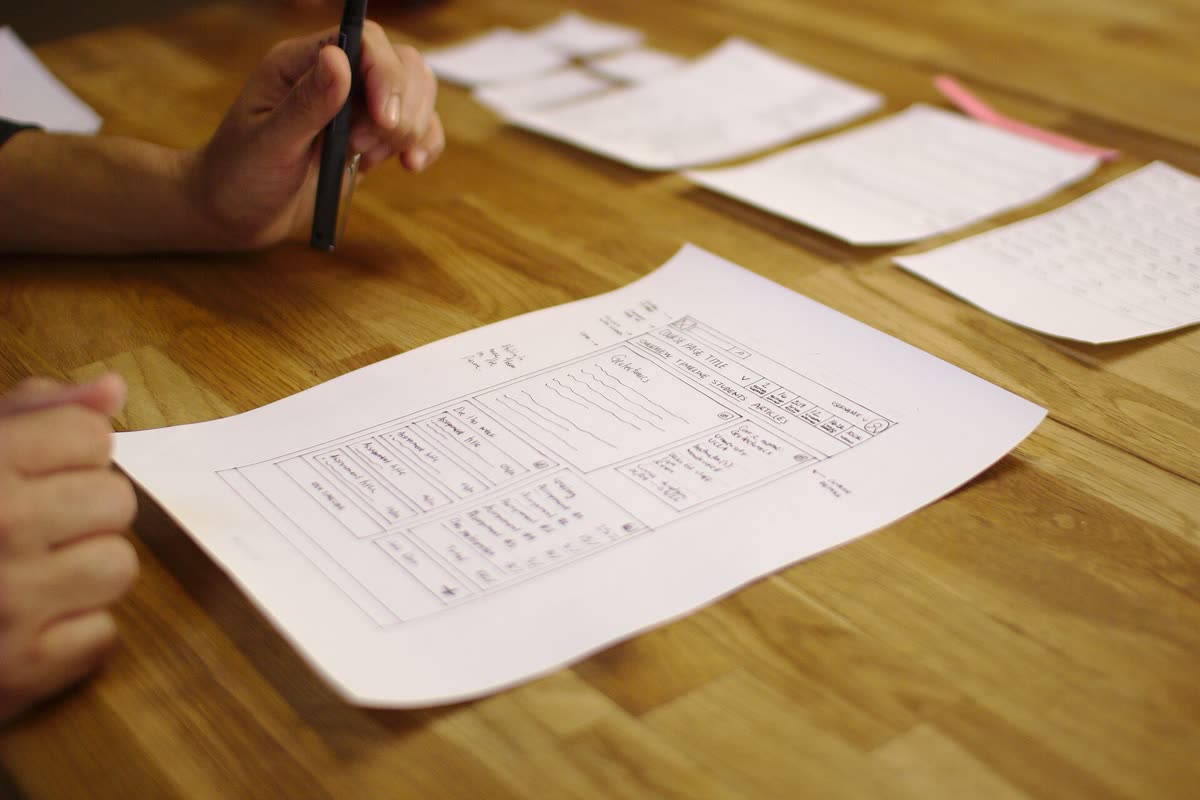

4. Running the session
- Welcome: "We're testing the design, not you. You can't do anything wrong."
- Ask them to think aloud, and show a short example.
- Give one task at a time, written on paper.
- Don't help. If they ask "Should I click here?", reply "What would you do if I weren't here?"
- Take notes: where they hesitate, what they say, what they expected.
- Thank them, and ask one closing question: "What was the hardest part?"
NN/g has a fuller guide (Moran, Usability Testing 101, 2019).
5. After the test
List every problem you saw, count how many people hit it, and fix the ones that blocked people first. Then test again. A one-page summary with three to five problems and a quote each is more useful than a long report nobody reads.
6. Common mistakes
- Helping, explaining or defending the design during the session.
- Tasks that give away the answer.
- Testing with colleagues who know the product (see Employees as Usability-Test Participants).
- One big test at the end instead of several small ones along the way.
- Treating five people as enough to measure something.
7. Vocabulary
| Term | Meaning |
|---|---|
| Usability test | Watching real people try real tasks with a design |
| Task | A realistic goal you ask the participant to reach |
| Think aloud | Asking people to say what they think as they go |
| Moderator | The person running the session |
| Qualitative test | A test for finding problems and their causes, not for measuring |
8. Try it (no tools needed)
Do the Test with three people lab: three people, three tasks, one afternoon.
Reflection questions: What surprised you most about how people used your design? Which problem would you never have found by looking at it yourself?
9. If you already practise
- Invite a developer and a product manager to watch one session live; it ends many debates.
- Run small rounds every sprint instead of one big study per quarter.
- Steve Krug's Rocket Surgery Made Easy (New Riders) is the do-it-yourself guide to exactly this.
Checklist
Learn more
- NN/g: Why You Only Need to Test with 5 Users (2000) · Usability Testing 101 (2019) · Thinking Aloud: The #1 Usability Tool (2012) · Write Better Qualitative Usability Tasks (2017)
- Limits: Jeff Sauro, Why you only need to test with five users (explained) (MeasuringU, 2010)
Books, courses and videos to go deeper
- Rocket Surgery Made EasySteve KrugBook · New Riders (Amazon)
- Don't Make Me Think, RevisitedSteve KrugBook · New Riders, 2014
Book links go to Amazon. As an Amazon Associate I earn from qualifying purchases, at no extra cost to you.
Related
Short user interviews · Heuristic evaluation · Test with three people · Defining success · Task success and time on task